asaryun rug · 8 min read
Turkish Rugs Australia: The Complete Buyer's Guide (Kilim, Kervan, Asaryun) | Authentic Bazaar

A room changes the moment a Turkish rug touches the floor
There is a reason the Turkish rug has been travelling out of Anatolia for the better part of eight hundred years. On a bare floorboard it feels ornamental. Underfoot in an Australian home — a Sydney living room after work, a Melbourne bedroom in July — it becomes something else. It insulates. It softens the acoustics. It gives the eye a place to land. And, quietly, it carries a story: hand-drawn motifs shaped by a weaver's grandmother, colours pulled from Aegean water or Cappadocian rock, a knot count that hasn't changed for centuries.
This is a full guide to buying an authentic Turkish rug in Australia — how the different lines compare, which one suits which room, what the price is really telling you, and how to keep the rug looking beautiful long after it arrives at your door.
A quick history: why a Turkish rug is not just any rug
The Anatolian weaving tradition is one of the oldest continuous crafts in the world. The oldest surviving pile carpet — the Pazyryk — was woven in the fifth century BC. By the thirteenth century, Marco Polo was writing about "the finest carpets in the world" being made in Turkey. Ottoman weaving centres like Uşak, Hereke and Gördes gave the world the flowing floral field, the geometric medallion and the flat-woven kilim — three families of design that still shape rug making today.
What sets an authentic Turkish rug apart is the combination of the Turkish (Ghiordes) knot — symmetrical, tight, hard-wearing — and a design vocabulary that was never purely decorative. A pomegranate motif spoke of fertility. A hook pattern warded off the evil eye. Every rug carried a language.
Modern Turkish rugs — including the ones on this site — draw on that vocabulary without pretending every piece is a museum object. Machine-woven and blended-fibre rugs sit alongside hand-woven cotton kilims, and both are honest. The trick is knowing which one you're buying, and why.
The four Turkish rug lines at Authentic Bazaar
Rather than list forty rugs, it's more useful to understand the four lines we import, because each solves a different problem. Once you know which line fits your room, choosing the specific rug becomes easy.
1. Cotton Kilim Rugs — washable, flat-woven, colour-forward
The Turkish cotton kilim rug is where our range starts. Flat-woven from 100% natural cotton, these rugs skip the pile altogether — no fluffy tufts, no shedding, just a tight, patterned weave that lies flat against the floor. That single choice unlocks the most practical rug in the range: you can throw it in the washing machine when the toddler spills apple juice on it, hang it on the line, and lay it back down by afternoon.
Colours read as saturated and hand-drawn rather than trendy — a warm burgundy, a classic red, a red-and-white geometric that carries a Scandinavian mood, a grounded brown, a cool turquoise. Sizes step from a runner to a small area rug, so you can match one to a hallway or two to bracket a bed.
Best for: kitchens, dining nooks, kids' rooms, indoor–outdoor porches, and any high-use zone where a rug will need a real wash rather than a spot clean. Priced accessibly enough to buy two or three and rotate.
2. The Istanbul Collection — vintage-look Turkish rugs, styled for real rooms
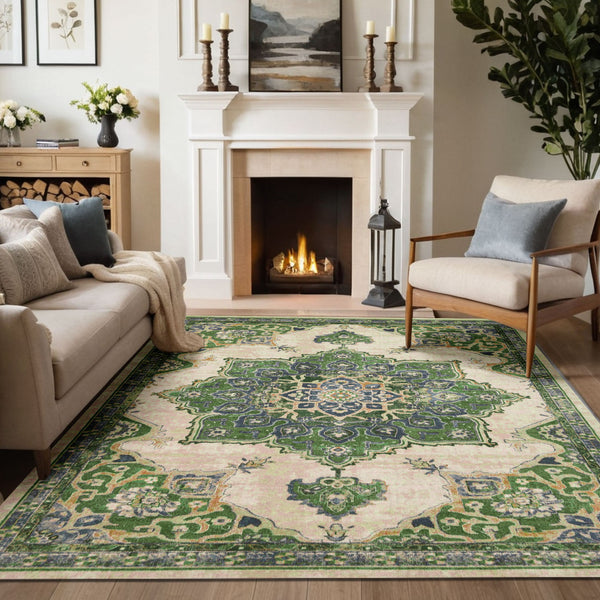
The Istanbul Collection is our vintage-look line: sun-faded colour, worn-in medallions, quiet borders. These are the Turkish rugs you buy when the room already has a strong style and the rug's job is to join the room rather than compete with it. An emerald green medallion softens a modern coastal lounge without shouting. A vintage red anchors a bohemian corner. A Greek-key border rug tightens up a hallway or a dining space with a crisp geometric edge.
Standard size is 160 × 230 cm, the sweet spot for most Australian living rooms — big enough to sit under a coffee table with the front legs of a sofa on the rug, small enough to actually fit an apartment. Because these lean on styled fading rather than fresh saturation, they read as "lived in already", which suits a home that isn't chasing a showroom look.
Best for: living rooms and bedrooms where the styling brief is "grounded, layered, a little vintage" — the mid-price sweet spot for a first Turkish rug.
3. Asaryun Premium Turkish Rugs — traditional pattern, everyday hardness
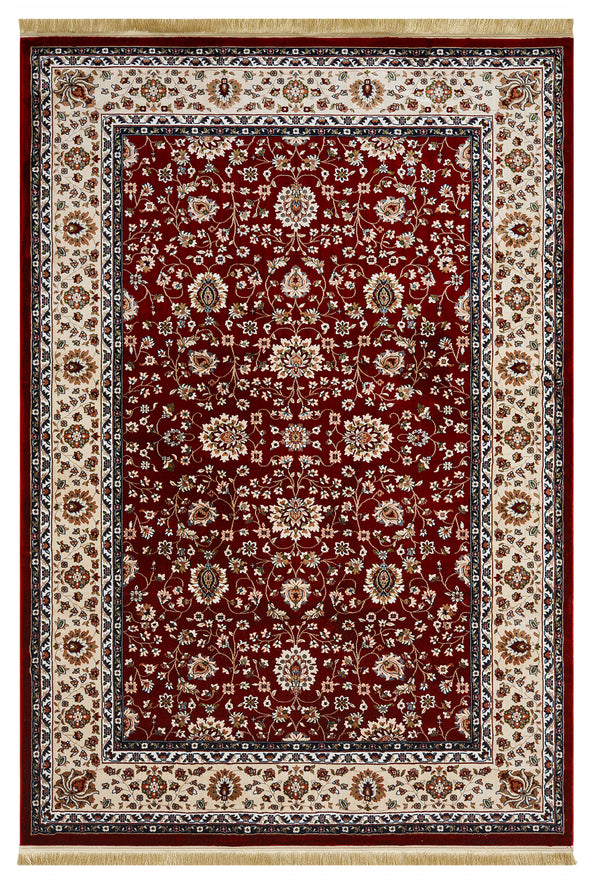
The Asaryun line is the answer to the question every parent asks: "I love the look, but will it survive us?" Woven in Turkey from hard-wearing polypropylene with a soft, refined surface, Asaryun rugs pair traditional Turkish patterns — medallions, corner motifs, floral fields — with a build that shrugs off daily traffic, spilled drinks, kids' scooters and a Labrador's morning enthusiasm.
Codes like H4158A, H5500, H3846A and H3990 refer to specific pattern designs; each carries a distinct field motif and colour palette. Because the fibre is synthetic, colour retention is excellent and stain resistance is high — a good match for the honest reality of family life.
Best for: family living rooms, playrooms, and high-traffic zones where you want the beauty of a traditional Turkish rug and the toughness of a rug you can actually live on.
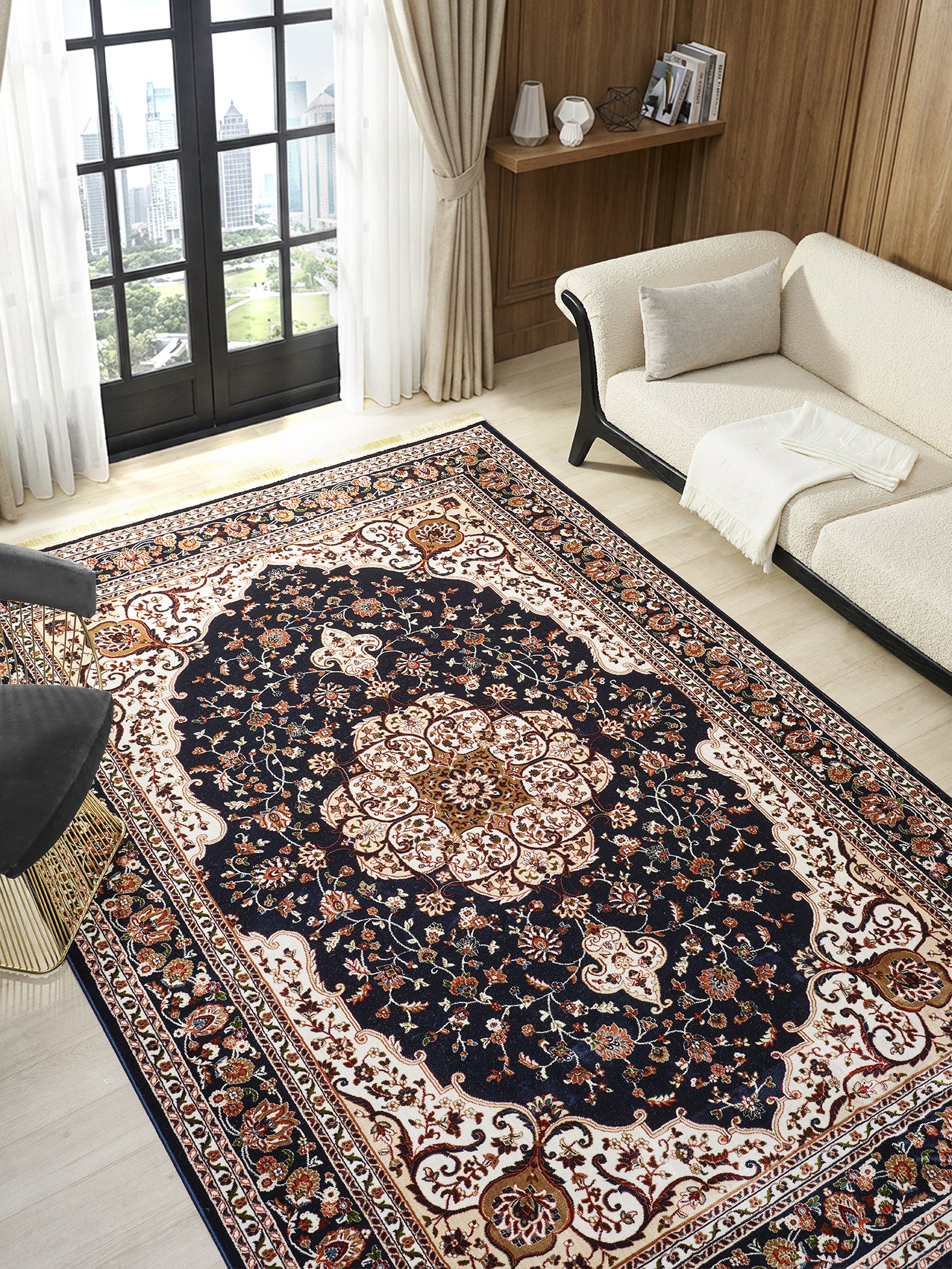
4. Kervan Rugs — modern tonal palettes, machine-woven in Turkey
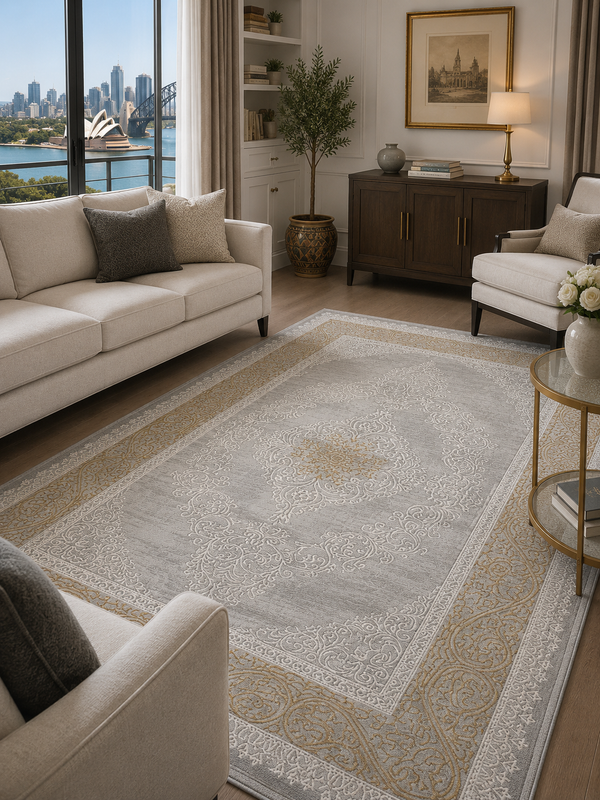
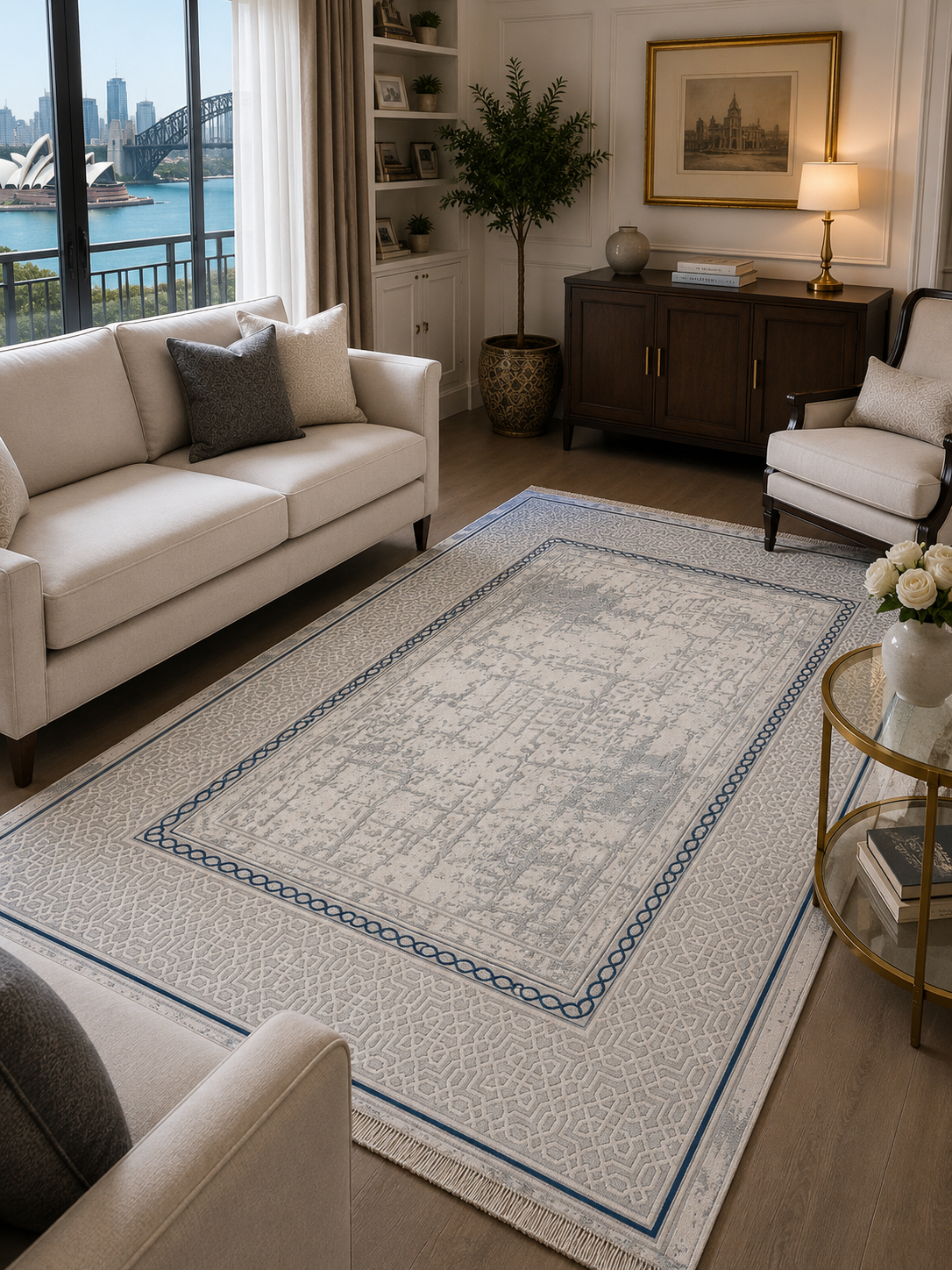
The Kervan collection is our modern piece — machine-woven in Turkey with a soft, even surface and a restrained tonal palette. Instead of a busy medallion, a Kervan rug does its work in gradations: soft gray with warm gold, cool gray with muted blue, tonal gray-on-gray. The result is a rug that reads as calm, an ideal foundation for a modern Australian home built around neutrals, natural timber and a couple of considered accent pieces.
Series codes like A7114, AK076 and AK187 denote the design family; the second word (Gray/Gold, Gray/Blue, Gray/Gray) tells you the colourway. Sizes are standard living-room proportions, and the weave is dense enough to look premium underfoot for years.
Best for: modern living rooms, master bedrooms, dining rooms — the "quiet hero" rug that anchors a space without demanding attention.
How to choose the right Turkish rug for your home
Once you know the four lines, the decision comes down to three simple filters: the room, the look you're building, and the budget.
By room
- Kitchen, laundry, mud room, indoor–outdoor: Cotton kilim. Washable is not negotiable.
- Living room, family lounge (kids, pets): Asaryun. Toughness plus tradition.
- Living room, adults / low-traffic: Kervan for modern calm, or an Istanbul-collection piece for vintage warmth.
- Bedroom under the bed: Istanbul collection at 160×230, positioned with the front third of the bed off the rug. Or a pair of small kilims either side.
- Hallway or runner: Cotton kilim in a runner size, or a small Istanbul-collection piece.
By style
- Modern minimalist / Scandinavian: Kervan tonal grays, or a cotton kilim in a single flat colour.
- Coastal Australian: Istanbul faded blues and turquoise cotton kilims — the palette that sits well beside linen and pale timber.
- Bohemian / layered: Vintage Red or Emerald Green Medallion from the Istanbul line. Then layer a smaller kilim over it for real bohemian energy.
- Traditional / heritage: Asaryun — the pattern language is closest to a hand-woven heirloom look.
By budget
- Under $40: Cotton kilim rugs (from $29). The value pick.
- $40–$100: Istanbul collection ($39) or Asaryun ($99). This is where most rooms land.
- $400 and up: Kervan ($399). Foundation rug for a room you're not going to redecorate any time soon.
Sizing: how big should your Turkish rug be?
The single most common mistake is buying a rug that's too small. As a rule for the Australian living room:
- Apartment living room, 2-seat sofa: 120 × 180 cm minimum. Sofa front legs on the rug.
- Standard living room, 3-seat sofa: 160 × 230 cm — this is why so many of our rugs come in that size. The rug should extend past the sofa arms and comfortably fit a coffee table.
- Large open-plan lounge: 200 × 290 cm or larger. All four sofa legs on the rug.
- Under a queen bed: 160 × 230 cm, positioned so the front two-thirds of the bed sit on the rug and the rug extends about 60 cm past each side.
Caring for a Turkish rug in an Australian home
Turkish rugs are built for the long haul, but a few habits will keep yours looking beautiful for decades.
- Vacuum weekly without the beater bar (or on the gentlest setting) to lift dust from the weave.
- Rotate every six months so foot traffic and sunlight fade evenly rather than in a stripe.
- Spot-clean spills immediately with a clean cloth and cool water. Skip the harsh detergents on the wool and polypropylene lines.
- Wash your cotton kilim in the machine on a gentle cycle, cold water, mild detergent. Line-dry flat.
- Use a rug pad. It stops slippage, adds cushioning underfoot, and doubles the life of the rug by absorbing wear on the underside.
- Australian sun is intense — position rugs away from harsh direct afternoon light, or accept that some fading will happen and use rotation to keep it even.
Where to start
If you're buying your first authentic Turkish rug and you're not sure which line fits your room, the safest starting point is a 160 × 230 cm piece from the Istanbul Collection — the vintage-look line is forgiving of almost any decor style, the size fits most Australian living rooms, and the price ($39) leaves room to trial the size before committing to a larger investment piece.
Every rug ships from our Smithfield (Sydney) warehouse — same-day dispatch on orders before 4pm, free Australia-wide shipping over $150.
Any questions before you order? Our team in Sydney is a message away — we're a real showroom in Smithfield, not a drop-shipper, and we happily talk through sizing, colour and styling before you commit.